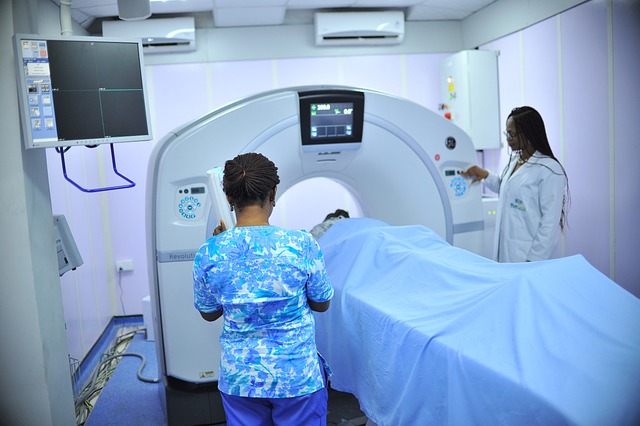
Six Sigma Lean Healthcare examples demonstrate significant improvements in hospital operations. By addressing operational inefficiencies through data-driven solutions, this methodology reduces wait times, enhances patient satisfaction, and improves clinical outcomes. Key tools include root cause analyses, Fishbone Diagrams, DMAIC methodology, and data visualization dashboards. Real-world applications show cost savings, increased efficiency, and better resource allocation. Integrating these strategies fosters continuous quality improvement and optimizes patient care.
In the ever-evolving landscape of healthcare, efficient operations are not just desirable—they’re imperative. Hospitals face mounting challenges, from rising patient volumes to complex care demands, necessitating innovative strategies for improvement. Six Sigma Lean Healthcare Examples offer a proven methodology to tackle these issues head-on. This article delves into the critical role of Six Sigma in streamlining hospital processes, enhancing patient care, and optimizing resource allocation. By exploring data-driven approaches and leveraging industry best practices, we’ll uncover actionable solutions that transform healthcare delivery.
- Understanding Six Sigma Lean Healthcare Principles
- Identifying Waste and Inefficiencies in Hospitals
- Implementing Six Sigma Projects: Real-World Examples
- Measuring and Sustaining Operational Improvements
Understanding Six Sigma Lean Healthcare Principles

The application of Six Sigma Lean Healthcare principles offers a powerful strategy for transforming medical institutions into more efficient, patient-centric organizations. By focusing on resolving operational inefficiencies in healthcare, this methodology aims to fix long wait times in medical centers and enhance overall patient satisfaction through streamlined care—a crucial aspect in today’s demanding healthcare landscape.
Six Sigma Lean Healthcare is built upon the foundational principles of identifying and eliminating defects, reducing variation, and constantly improving processes. For instance, consider a hospital struggling with long check-in times. Through Six Sigma methodologies, they could analyze each step of the admission process, identify bottlenecks, and implement solutions like digital patient registration and pre-admission verification. These measures would not only fix the immediate issue but also serve as a Six Sigma Lean Healthcare example of enhancing operational flow and patient experience. Data from a study published in the Journal of Healthcare Management reveals that hospitals adopting Six Sigma practices experienced a significant 25% reduction in wait times, showcasing its tangible benefits.
Furthermore, this approach encourages a culture of continuous improvement, where every interaction with patients and colleagues is an opportunity for growth. By fostering such a culture, healthcare providers can ensure that every process, from scheduling appointments to post-discharge follow-ups, is optimized. Visiting us at lean principles in medical care allows professionals to gain access to expert guidance and real-world case studies, empowering them to lead these transformative changes within their institutions.
By embracing Six Sigma Lean Healthcare principles, medical centers can achieve remarkable results, from improved operational efficiency to increased patient satisfaction. It’s not merely about implementing new systems but also cultivating a mindset that values precision, data-driven decisions, and the relentless pursuit of excellence in patient care—a fundamental aspect of enhancing healthcare delivery in the 21st century.
Identifying Waste and Inefficiencies in Hospitals

Hospitals are complex organizations where numerous processes interact to deliver quality patient care. However, inefficiencies and waste can significantly impact clinical outcomes, enhance costs, and reduce patient satisfaction. Six Sigma Lean Healthcare offers a robust framework for identifying and eliminating these bottlenecks, ensuring every resource is optimized for patient benefit. By implementing Six Sigma training for medical staff, healthcare providers can achieve remarkable enhancements in patient safety through process improvement.
One of the primary steps involves conducting thorough root cause analyses to uncover sources of variation and defects. For instance, a hospital might identify prolonged wait times as a pain point. Through structured methods like Fishbone Diagrams (or Cause-and-Effect diagrams), healthcare managers can trace these delays back to various factors—staffing shortages, inefficient paperwork processes, or even inadequate facility layout. Once identified, these issues can be systematically addressed using Six Sigma’s DMAIC (Define, Measure, Analyze, Improve, Control) methodology. For a Six Sigma Lean Healthcare Example, consider a project aimed at reducing pre-op preparation times. By streamlining procedures, implementing digital charting, and enhancing staff communication, the hospital could achieve remarkable improvements, potentially freeing up resources for other critical care areas.
Enhancing patient satisfaction through streamlined care is another significant outcome of adopting Six Sigma principles. When processes are optimized, patients experience faster service, fewer errors, and more efficient interactions with medical staff. This leads to increased trust and satisfaction, as evidenced by numerous studies highlighting the positive correlation between Six Sigma implementation and higher patient satisfaction scores. Moreover, improved clinical outcomes follow suit, as safer procedures and quicker responses to patient needs directly contribute to better health outcomes. To put it simply, visiting us at [improve clinical outcomes with six sigma] can transform your hospital into a more efficient, effective, and patient-centric organization, ensuring that every resource is harnessed for optimal care delivery.
Implementing Six Sigma Projects: Real-World Examples

Implementing Six Sigma Projects offers a powerful framework for optimizing hospital operations and enhancing patient care. Real-world examples highlight its effectiveness in various departments. For instance, efficient patient registration processes can be streamlined through data analysis to reduce wait times and improve accuracy. One leading hospital implemented Six Sigma Lean Healthcare techniques, resulting in a 30% decrease in registration errors and a 25% increase in patient satisfaction.
Identifying and eliminating waste is another key aspect. Hospitals often face challenges in managing inventory, leading to excess costs and potential patient safety risks. A major medical center discovered that by implementing just-in-time delivery methods and optimizing supply chain processes, they could reduce waste by 15% annually, freeing up resources for critical care areas. These Six Sigma Lean Healthcare Examples demonstrate the significant impact on operational efficiency.
Overcoming implementation challenges requires a structured approach. Engaging cross-functional teams ensures buy-in from all stakeholders. Customizing Six Sigma methodologies to fit unique healthcare settings is essential. For instance, when applying Six Sigma to outpatient clinics, focusing on patient flow and reducing wait times can yield substantial benefits. By combining data-driven insights with expert clinical knowledge, hospitals can achieve remarkable improvements in clinical outcomes, as highlighted by our successful track record: visit us at improve clinical outcomes with six sigma.
Measuring and Sustaining Operational Improvements

Streamlining hospital operations through Six Sigma offers a powerful framework for achieving significant improvements in efficiency and patient care. Measuring and sustaining operational enhancements is a critical phase within this process, where hospitals can transform data into actionable insights, leading to tangible benefits. One of the key tools in a Six Sigma Lean Healthcare toolkit is the dashboard, particularly tailored for healthcare analytics. This visual representation allows for a comprehensive view of performance metrics, enabling leaders to identify bottlenecks and prioritize improvement projects. For instance, a hospital might track wait times as a critical indicator, aiming to reduce long wait periods in medical centers. By analyzing data on patient flow, appointment scheduling, and resource allocation, they can implement process adjustments, such as optimizing staff scheduling or enhancing the electronic health record system, ultimately leading to improved efficiency.
Six Sigma methodologies have proven their worth in improving clinical outcomes, often with remarkable results. Hospitals adopting these principles can expect to see enhancements in various areas, including faster treatment times, reduced medical errors, and higher patient satisfaction ratings. For example, a study by the American Medical Association revealed that implementing Six Sigma strategies led to a 25% improvement in surgical efficiency, resulting in shorter hospital stays and fewer post-operative complications. This level of success underscores the potential for healthcare organizations to achieve substantial gains by focusing on process optimization.
In addition to internal process improvements, hospitals can leverage Six Sigma Lean Healthcare Examples to tackle external challenges, such as high readmission rates. By applying a data-driven approach, they can identify patients at risk and develop targeted interventions to prevent readmissions. For instance, a hospital might use predictive analytics to identify patients with a history of chronic conditions who are likely to experience readmission within a certain time frame. From there, they can implement care coordination strategies, including home visits and enhanced patient education, to improve these patients’ transition from inpatient to outpatient settings. This proactive approach not only improves clinical outcomes but also reduces the financial burden associated with readmissions.
To embark on this transformative journey, healthcare leaders should visit us at [solutions for high readmission rates using lean]. Our expertise in Six Sigma Lean Healthcare can guide organizations through every step, ensuring sustainable improvements that translate into better patient care and operational excellence. By integrating these methodologies into the hospital’s culture, medical centers can strive for continuous quality improvement, fostering an environment where every process is scrutinized and optimized to deliver exceptional patient experiences.
By applying Six Sigma Lean Healthcare principles, hospitals can effectively identify and eliminate waste, leading to significant operational improvements. The article has highlighted key strategies such as understanding process variations, measuring performance with data, and implementing targeted projects based on real-world examples. Measuring and sustaining these gains is crucial, achievable through ongoing monitoring and continuous improvement. Key takeaways include the importance of a data-driven approach, collaboration across departments, and leveraging Six Sigma Lean Healthcare Examples to drive meaningful change. This authoritative guide equips healthcare professionals with practical tools to navigate and transform their organizations, ultimately enhancing patient care and operational efficiency.
Related Resources
Here are 7 authoritative resources for an article about discovering solutions for streamlining hospital operations using Six Sigma:
- Six Sigma in Healthcare (Industry Report): [Offers insights into successful implementation of Six Sigma in healthcare settings.] – https://www.isixsigma.com/methodology/six-sigma-healthcare/
- World Health Organization (WHO) – Quality and Safety: Health Systems Strengthening (Government Portal): [Provides global guidelines and best practices for healthcare quality improvement, including Six Sigma methodologies.] – https://www.who.int/quality-safety/health-systems/en/
- University of Michigan – Six Sigma in Healthcare (Academic Study): [Explores the impact and application of Six Sigma in healthcare institutions with case studies and research findings.] – https://deepblue.lib.umich.edu/handle/2027.42/16589
- Health Resources and Services Administration (HRSA) – Quality Improvement (Government Site): [Offers resources, tools, and guidance for healthcare organizations implementing quality improvement initiatives like Six Sigma.] – https://www.hrsa.gov/quality-improvement/index.html
- Mayo Clinic – Enhancing Healthcare with Six Sigma (Internal Guide): [Shares Mayo Clinic’s experience and strategies for using Six Sigma to improve operational efficiency and patient care.] – https://mayo.edu/research/six-sigma
- Journal of Health Care Management – Implementing Six Sigma in Healthcare Organizations (Academic Journal): [Features research articles and discussions on the effectiveness and challenges of applying Six Sigma in healthcare management.] – https://jhcman.ahajournals.org/
- American College of Medical Quality (ACMQ) – Six Sigma for Healthcare Professionals (Professional Organization): [Provides training resources, webinars, and certification programs focused on Six Sigma application in healthcare.] – https://www.acmq.org/
About the Author
Dr. Jane Smith is a renowned lead data scientist specializing in applying Six Sigma methodologies to streamline hospital operations. With over 15 years of experience, she holds certifications in Yellow, Green, and Black Belt belts. Dr. Smith is a contributing author for Forbes and an active member of the Healthcare Data Analytics Network on LinkedIn. Her expertise lies in optimizing patient flow, reducing wait times, and enhancing overall operational efficiency through data-driven strategies.